Bathroom surfaces
Selected walls, floors, vanity surrounds, and other details can be considered after the moisture conditions and product system are reviewed.
Hand-applied microcement finishes for selected bathrooms, walls, floors, and built-in surfaces across nearby NY and NJ homes.
Microcement follows the surface beneath it. Flatness, movement, joints, moisture, and existing finishes all need to be checked before the decorative layers are applied.
We build the scope around the actual room and a compatible product system. That includes preparation, sample approval, layered application, sealing, and protection while the finish cures.
The location, substrate, wear, and water exposure determine whether a surface is a good candidate.
Selected walls, floors, vanity surrounds, and other details can be considered after the moisture conditions and product system are reviewed.
A continuous floor finish depends on a stable, flat base and carefully planned joints, edges, thresholds, and transitions.
Microcement can give a wall a quiet mineral texture without introducing a repeated tile pattern or visible grout grid.
Compatible benches, shelves, and other prepared forms can be included when the shape, corners, and expected use suit the selected system.
Microcement is applied by hand. Color, trowel movement, texture, sheen, and room light all shape the final result.
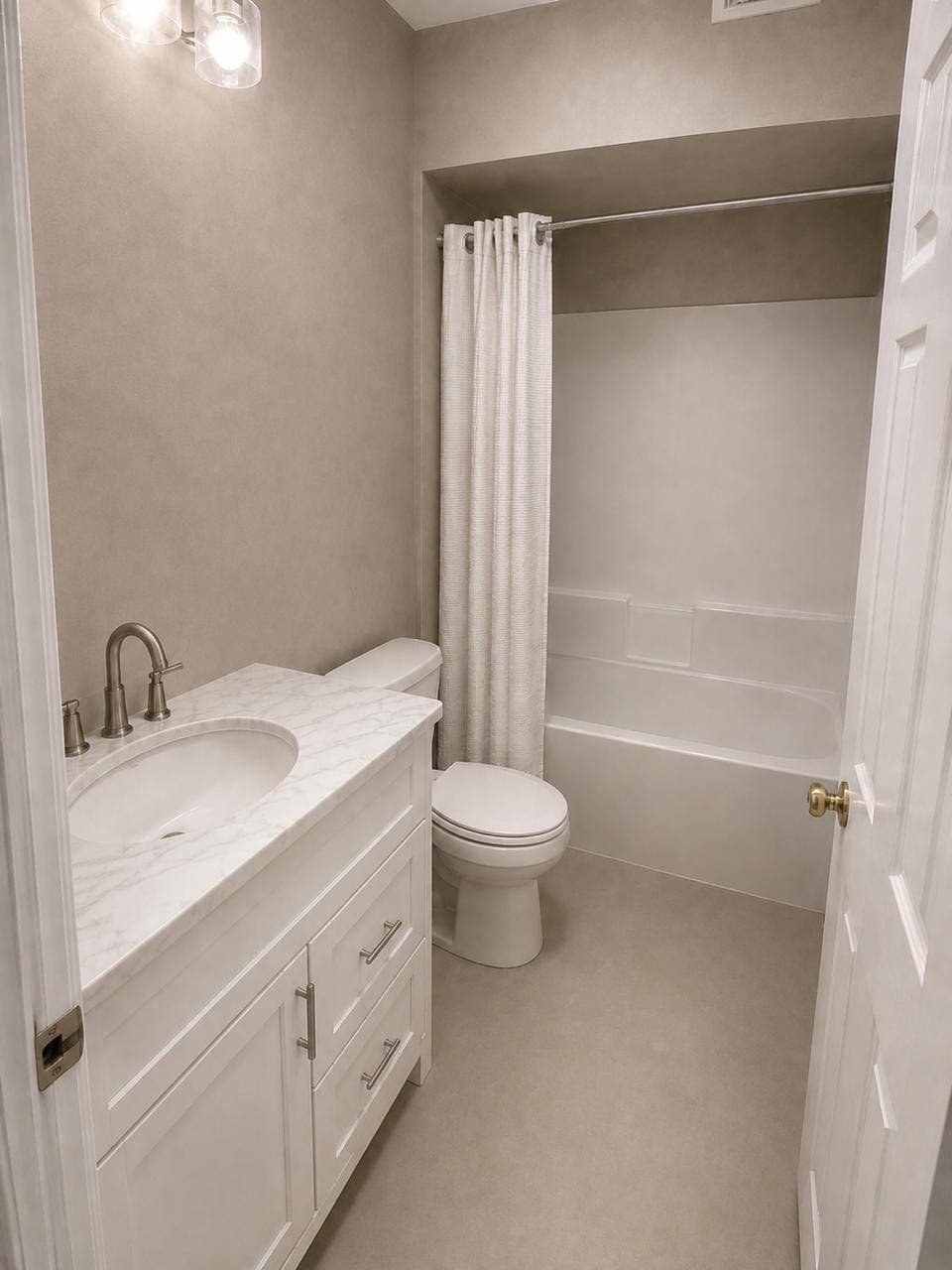
Color is chosen with the room light, fixtures, floor, and nearby finishes in mind. A physical sample gives the clearest reference.
Trowel movement creates subtle variation. The goal is a controlled hand-applied surface, not a perfectly printed or flat color.
The compatible sealer helps set the final sheen and protection level. Wet areas and floors may need a different specification from dry walls.
Open edges, corners, doors, drains, fixtures, and changes to tile or another floor finish all need to be planned before application.
Microcement is thin, so movement or cracking in the base can affect the finish. Loose or unstable material must be corrected first.
Dust, grease, moisture, and surface irregularities interfere with adhesion and appearance. The base is checked before coating begins.
Primer, reinforcement where specified, base coats, finish coats, and sealer need to belong to a compatible application system.
The final coats need the specified drying and cure time. The finished surface stays protected until it is ready for normal use and cleaning.
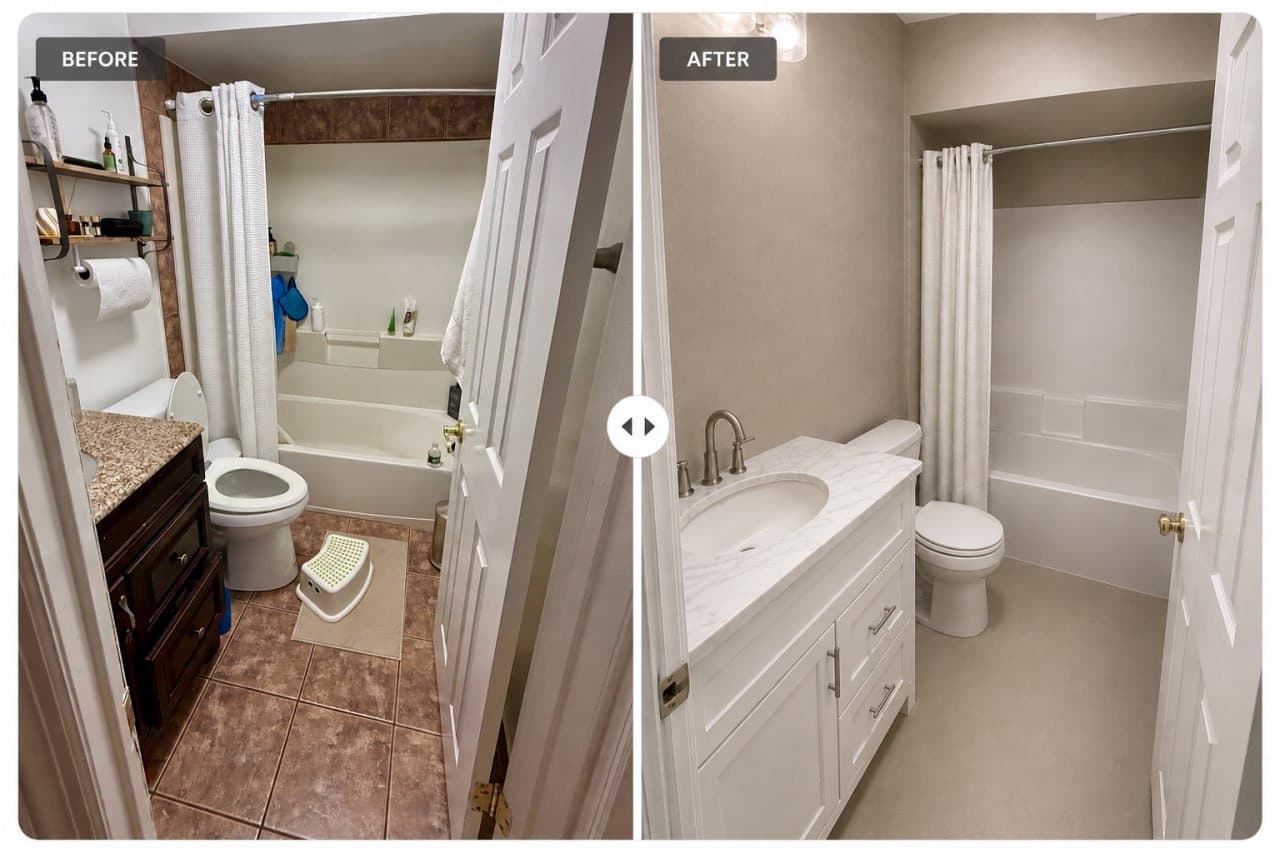
See the completed bathroom and its before-and-after comparison.
View microcement work
Tell us about the room, materials, and timing. We’ll follow up to discuss the work.